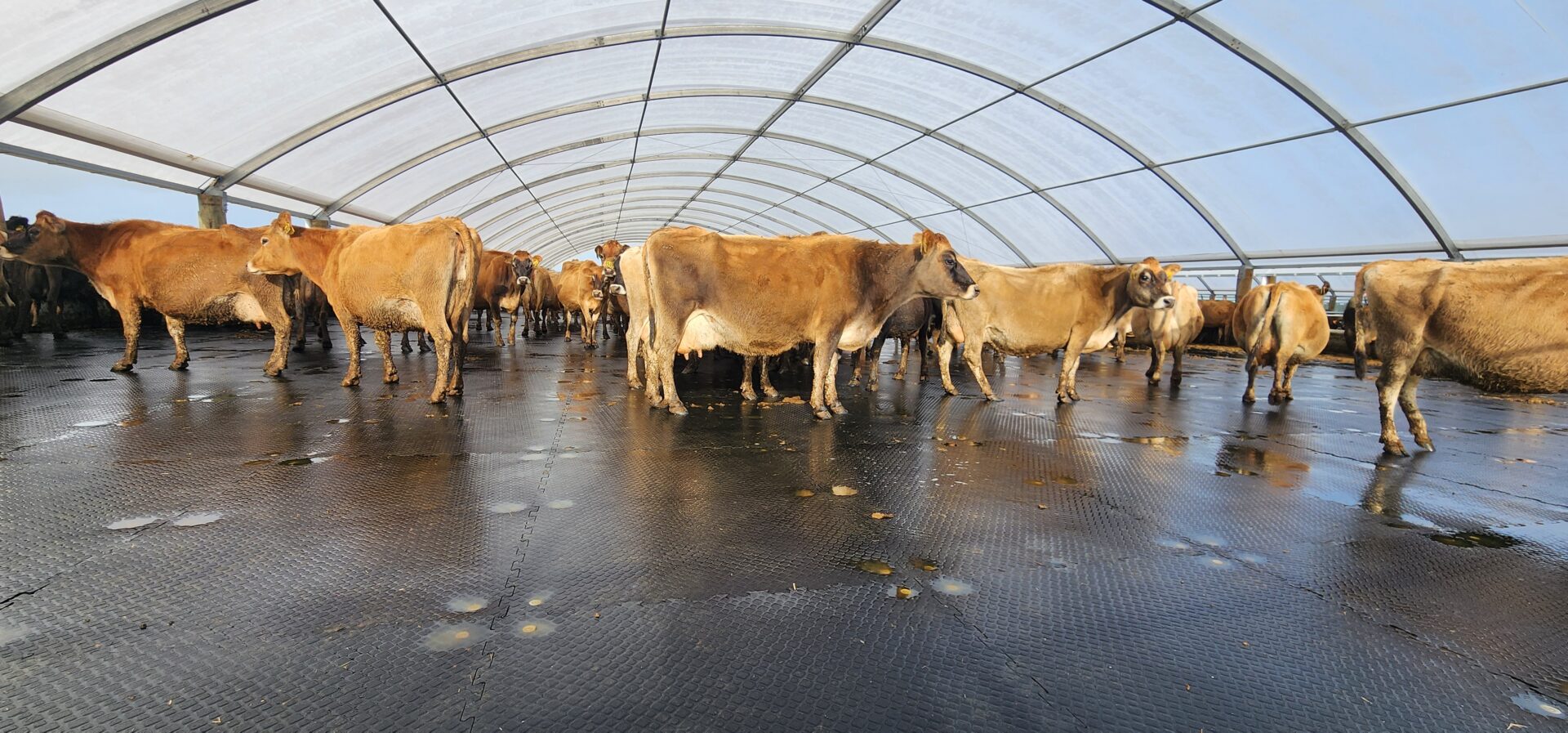
What is a Loose-Housed Barn?
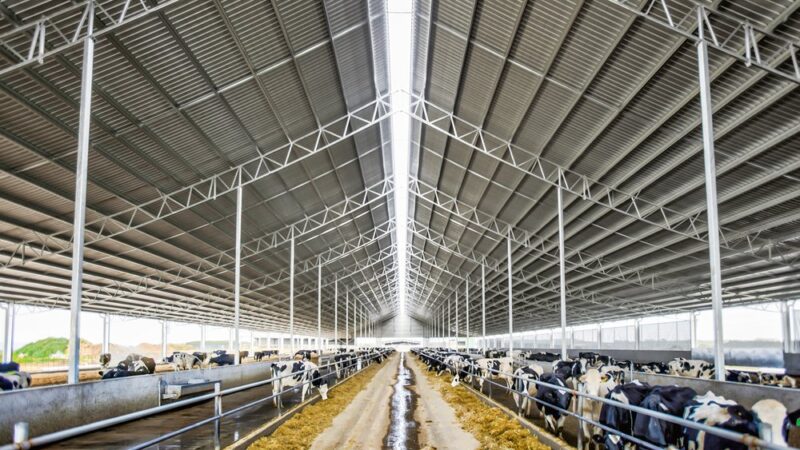
What is a Loose-Housed Barn?

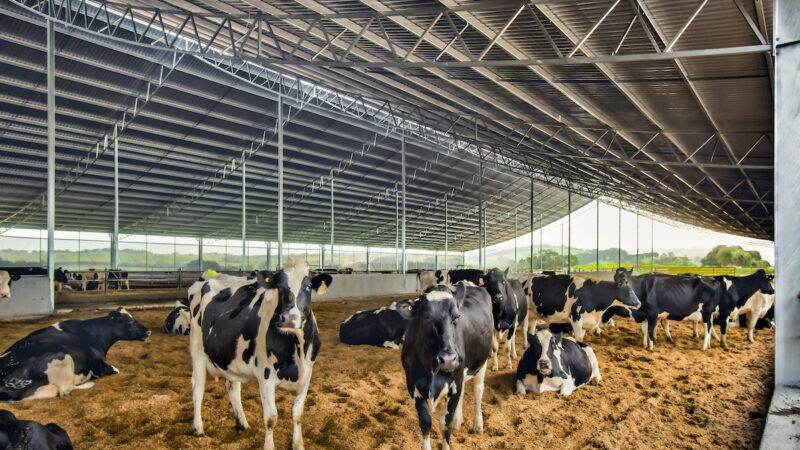
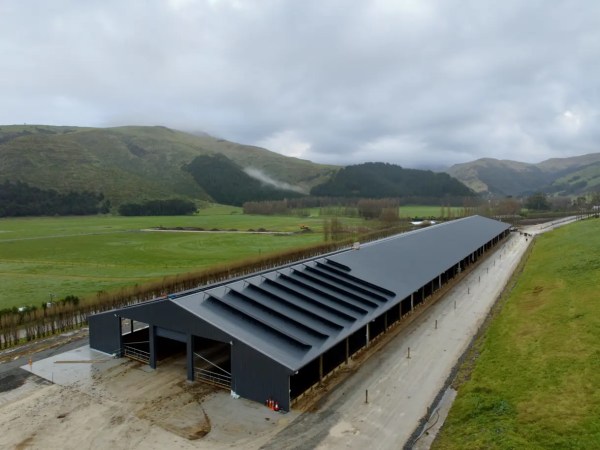
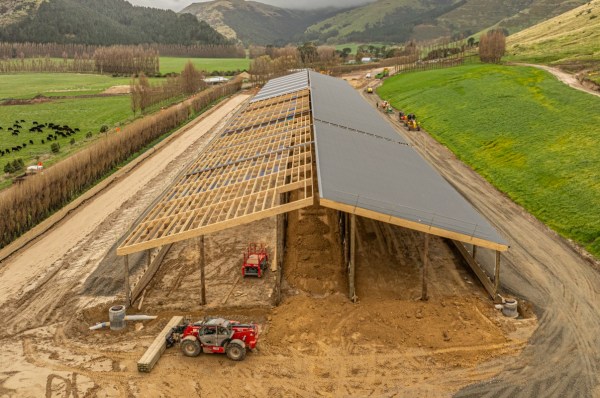
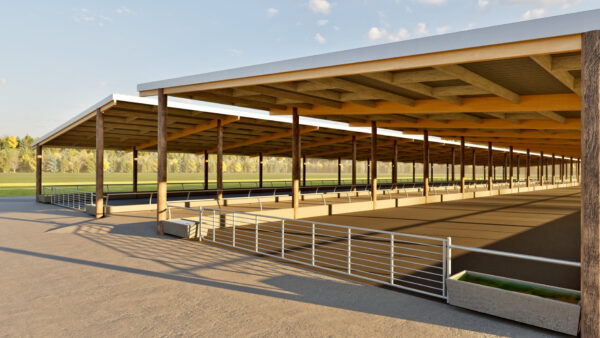
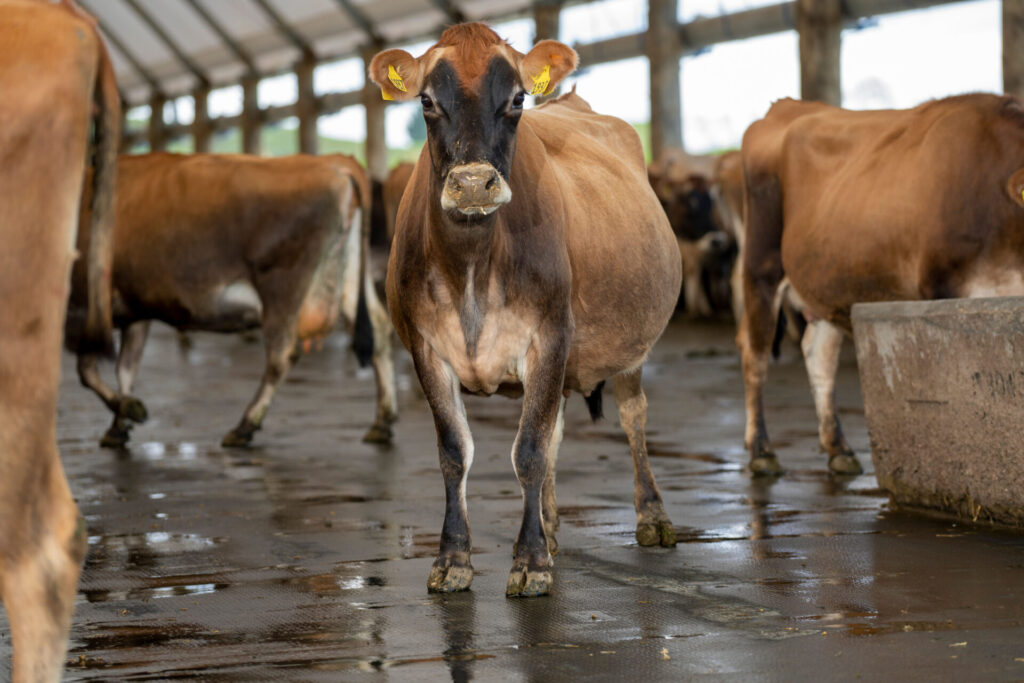
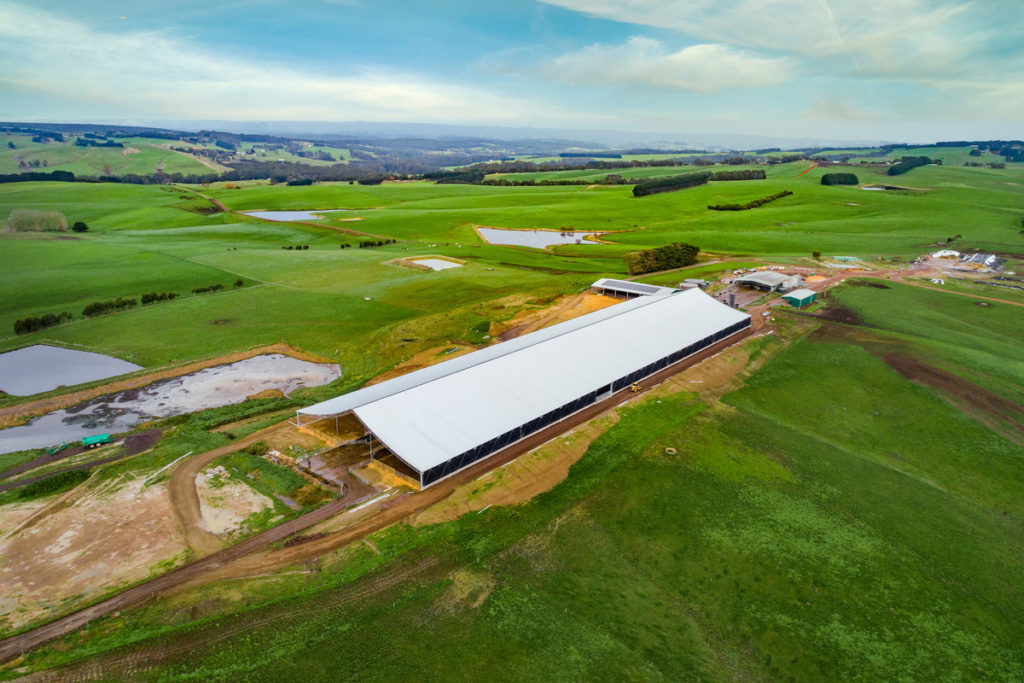
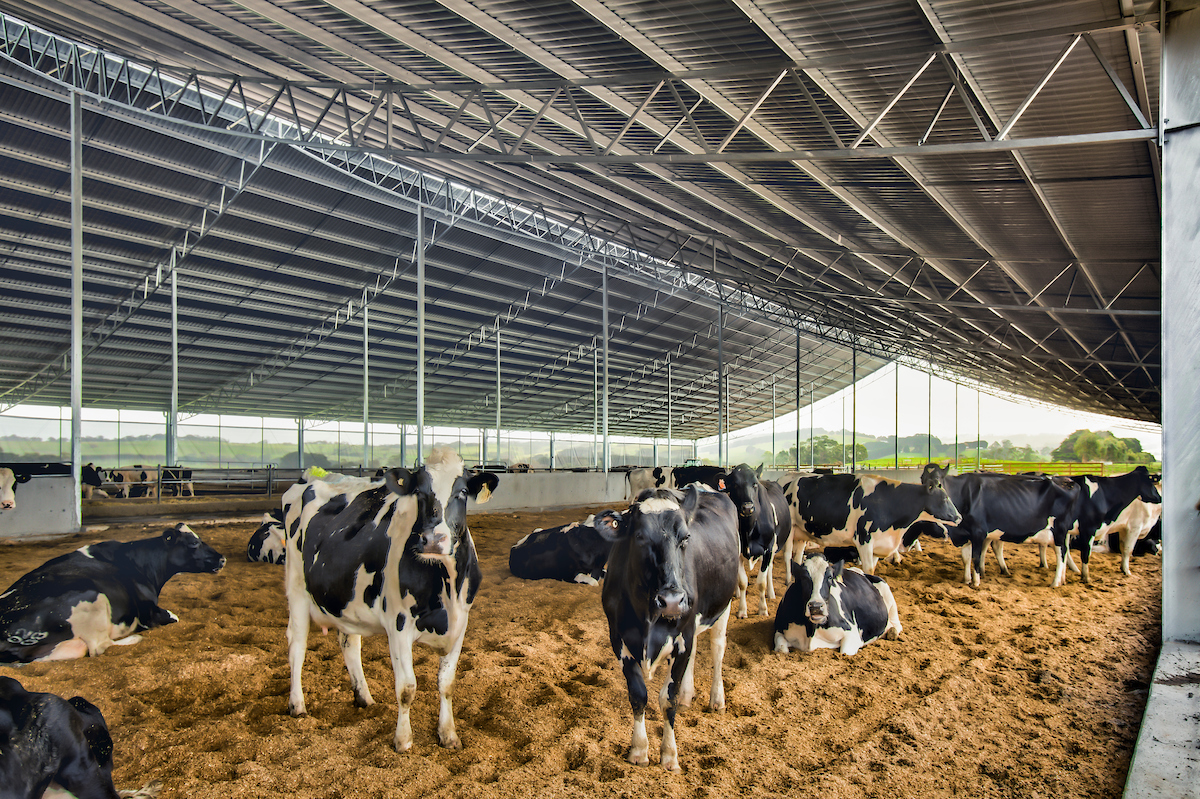
A loose-housed barn is a type of dairy housing system where cows have the freedom to move and rest in a large open area, typically bedded with soft materials like straw, sawdust, wood chips, or rubber matting. These barns are designed to provide shelter and comfort for dairy cattle, particularly during adverse weather conditions or for specific management needs such as calving or dry periods.

Pros and Cons of Building a Loose-Housed Barn

Pros:

Animal Welfare:

Enhances cow comfort and well-being.

Pasture Protection:

Reduces damage to pastures during wet or extreme weather.

Effluent Management:

Efficient handling of manure and bedding materials.

Cons:

Capital Investment:

Higher initial costs for construction and setup than some other systems.

Ongoing Maintenance:

Regular replacement of bedding materials if rubber matting isn't used.

Space Requirement:

Requires a significant amount of space for effective operation.

How Much Does It Cost to Build a Loose-Housed Barn?

The cost of constructing a loose-housed barn varies based on several factors, including size, material choices, and additional features. Typically, the cost ranges from $4,000 to $5,500 per cow. Factors influencing the cost include:

  • Construction Materials: Choice of materials for the structure and bedding.
  • Size and Capacity: Larger barns accommodating more cows will be more expensive.
  • Additional Facilities: Costs for integrating calving areas, feeding areas, and waste management systems.

Design Considerations

Key aspects to consider when planning a loose-housed barn include:
Bedding Management:

Type of bedding used and frequency of replacement. Rubber matting is low-maintenance while straw and woodchips require ongoing maintenance.

Ventilation:

Ensuring proper airflow to maintain a healthy environment.

Layout and Accessibility:

Design for ease of cow movement and farm management operations.

Success Stories

Gallery

NumatAGRI: Tailored Solutions for Your Farm

We don’t just bring a catalogue; we bring a commitment to understanding your unique needs.

With our design and construction expertise, we’ll help you visualize your project with 3D designs and provide transparent costings.

If you’d like to discuss options with one of our consultants, fill out this form.

Or call us on: 0800 686 119

What is a Composting Barn?

Composting Barns

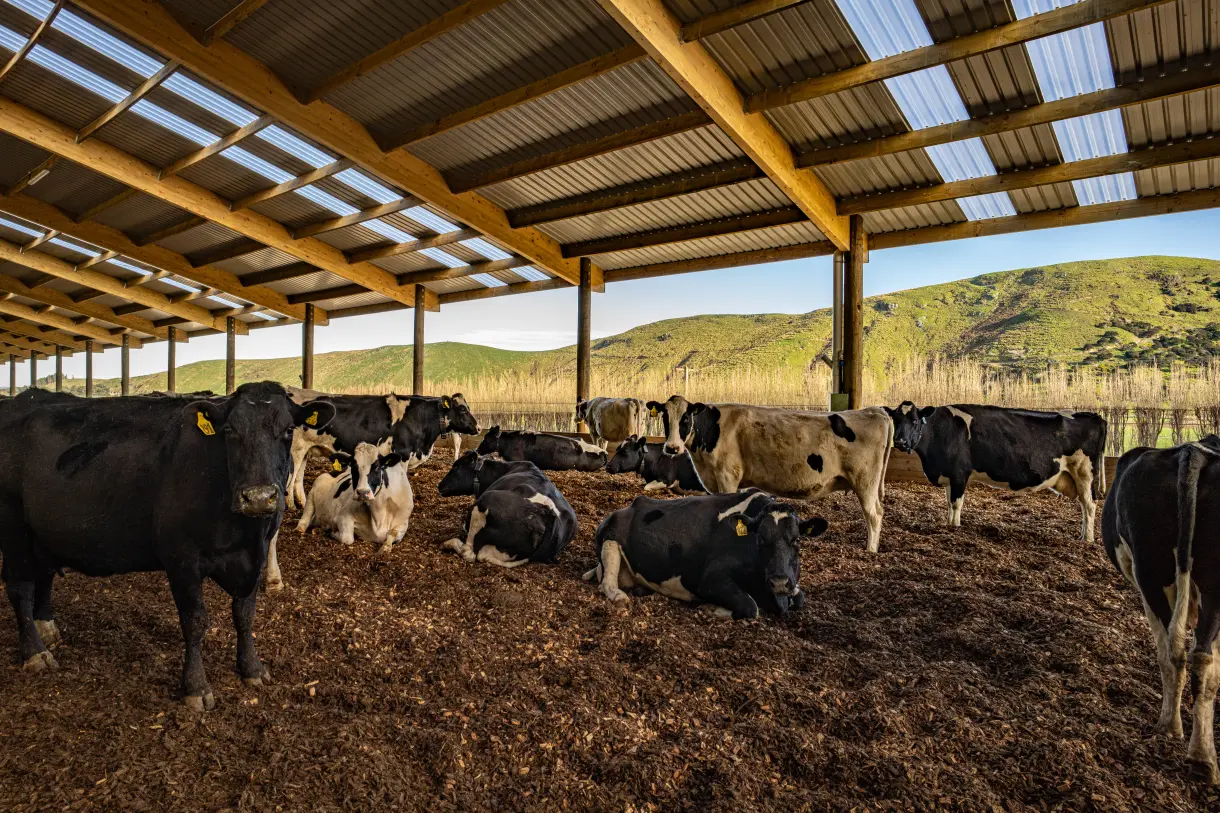
A composting barn is an off-paddock housing solution where cows rest on a composting bed under a covered roof. The barn’s design promotes cow comfort and health by providing a warm, dry, and well-ventilated environment. Composting barns are increasingly popular for their environmental benefits and cow welfare considerations.

Pros of Building a Composting Barn

Pros:

Cow Comfort:

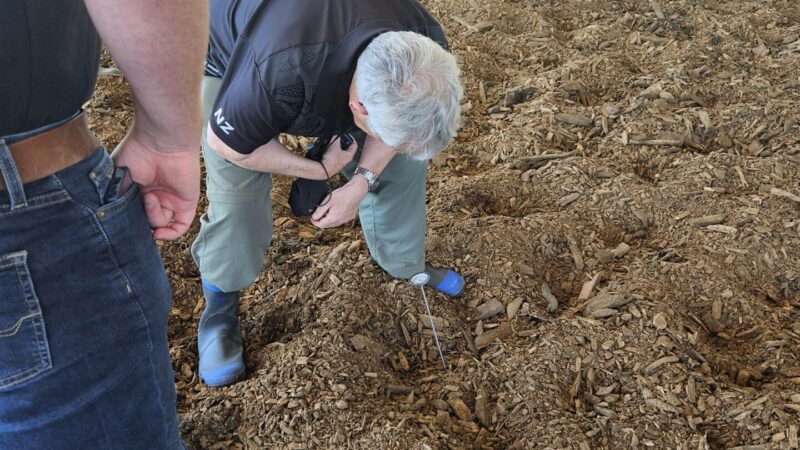
Composting barns have been proven to be one of the most comfortable surfaces for cows, with many studies showing lying times of between 10-12 hours per day, which when compared against other alternatives is significantly higher. This directly impacts milk production per cow, because blood flow to the udder increases 30-40% when lying down.

Manure Management:

The simplicity of a composting barn, allows all manure created in the barn to be captured and stored without the need for effluent holding facilities like sumps, weeping walls etc. This in turn means money is saved and the farmer does not have to invest in larger effluent ponds, like they would with other systems.

Health Benefits:

When managed correctly, cows in composting barns are generally cleaner and have less chance of going lame because of how soft the surface is when compared to other systems. This however is dependent on the walking distance and track materials cows are exposed to.

Let’s Price It Right

Get real numbers, not guesses.

We’ll show you the smartest way to build your composting barn: cost-efficient, practical, and built around your farm.

Design Considerations

When planning a composting barn, several key factors should be considered:
Bedding Material:

Research into the local availability and cost of woodchip or similar is a crucial part of planning for a composting barn. The quality of the material and cost can vary significantly depending upon region.

Layout:

One of the most overlooked aspects of composting barn projects is the importance of choosing a site that compliments the current farming operation and any future developments (calf sheds, access to feed bunkers etc.)

Civils:

The proposed site should be checked for nearness to property boundaries, housing, and waterways. The gradient of the site is important as the cost of leveling the site can either make or break a project.

Daily Management:

Thought should be given to the required daily management of the barn and equipment needed for this. In most cases an additional tractor, ripper attachment, and labour are required to allow for efficient and effective management. Regular monitoring of the bedding pack is crucial to ensure the temperature doesn’t drop below 50 degrees and the moisture content doesn’t exceed 70%. Staff should be trained to monitor the compost pack.

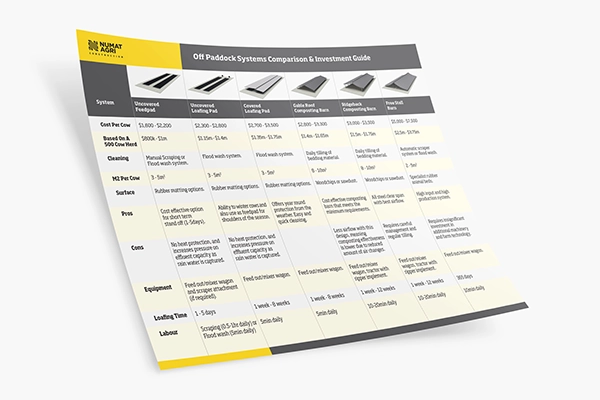
Get Our 'No Fluff' Off Paddock Systems Guide

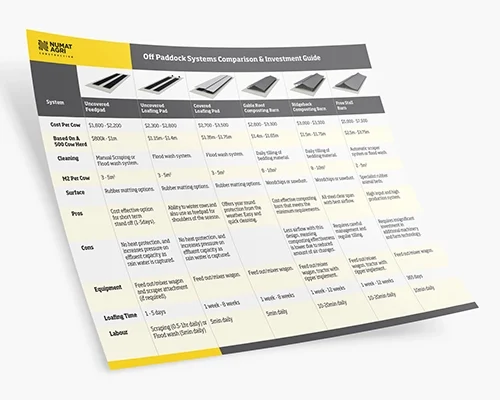
Quickly understand and compare all major off-paddock systems with our comprehensive, one-page guide. It covers:

  • Cost per cow
  • Cleaning system compatibility
  • Surface options
  • Area requirements per cow
  • Pros and cons of each system
  • Equipment needed
  • Loafing time
  • Daily and weekly labour needs
Off paddock systems comparison

Cut through the noise and get the clear insights you need to make an informed choice.

Ridgeback™ Shelters

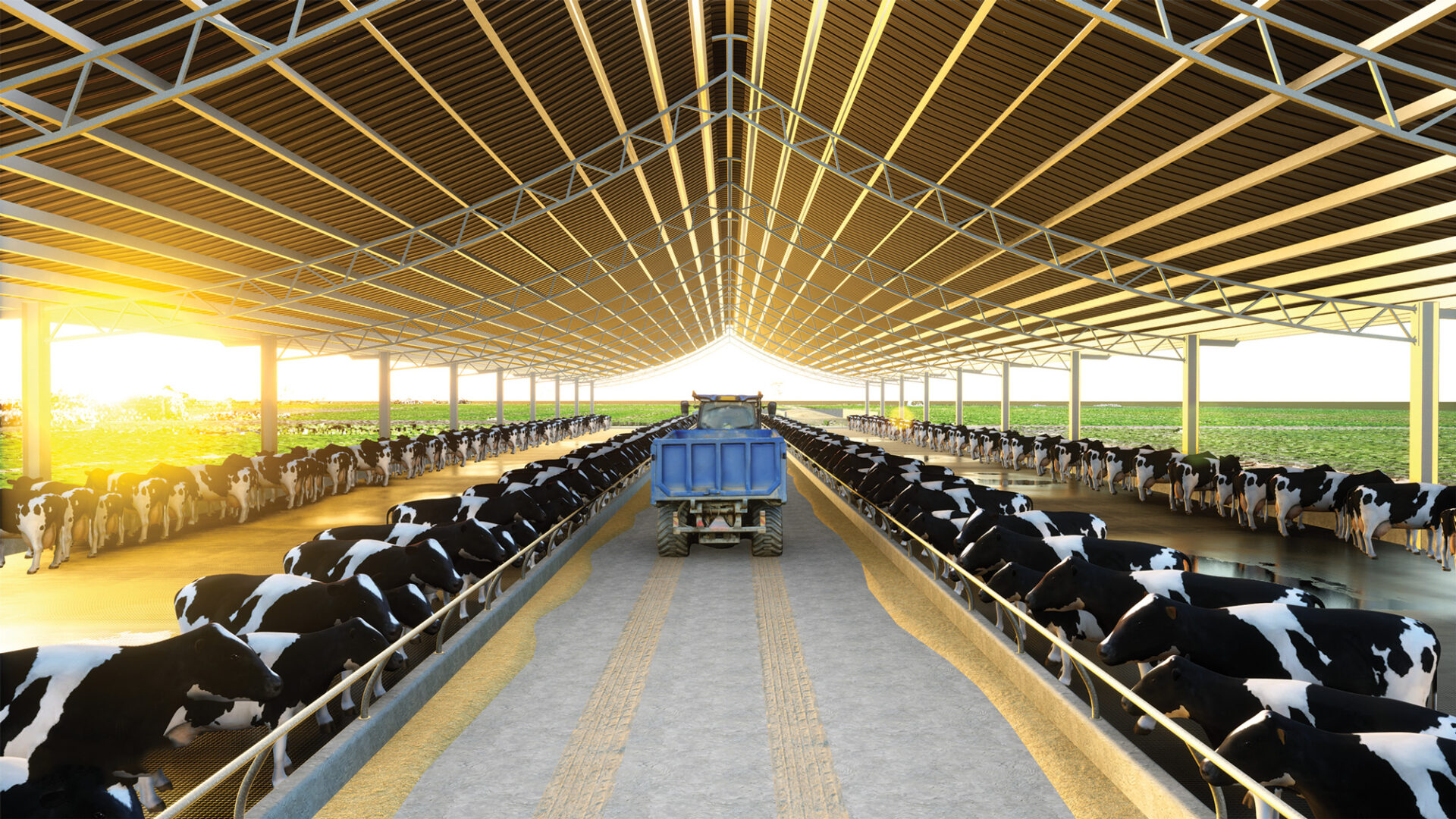
20% Higher Air Exchanges Per Hour Compared to Traditional Barns

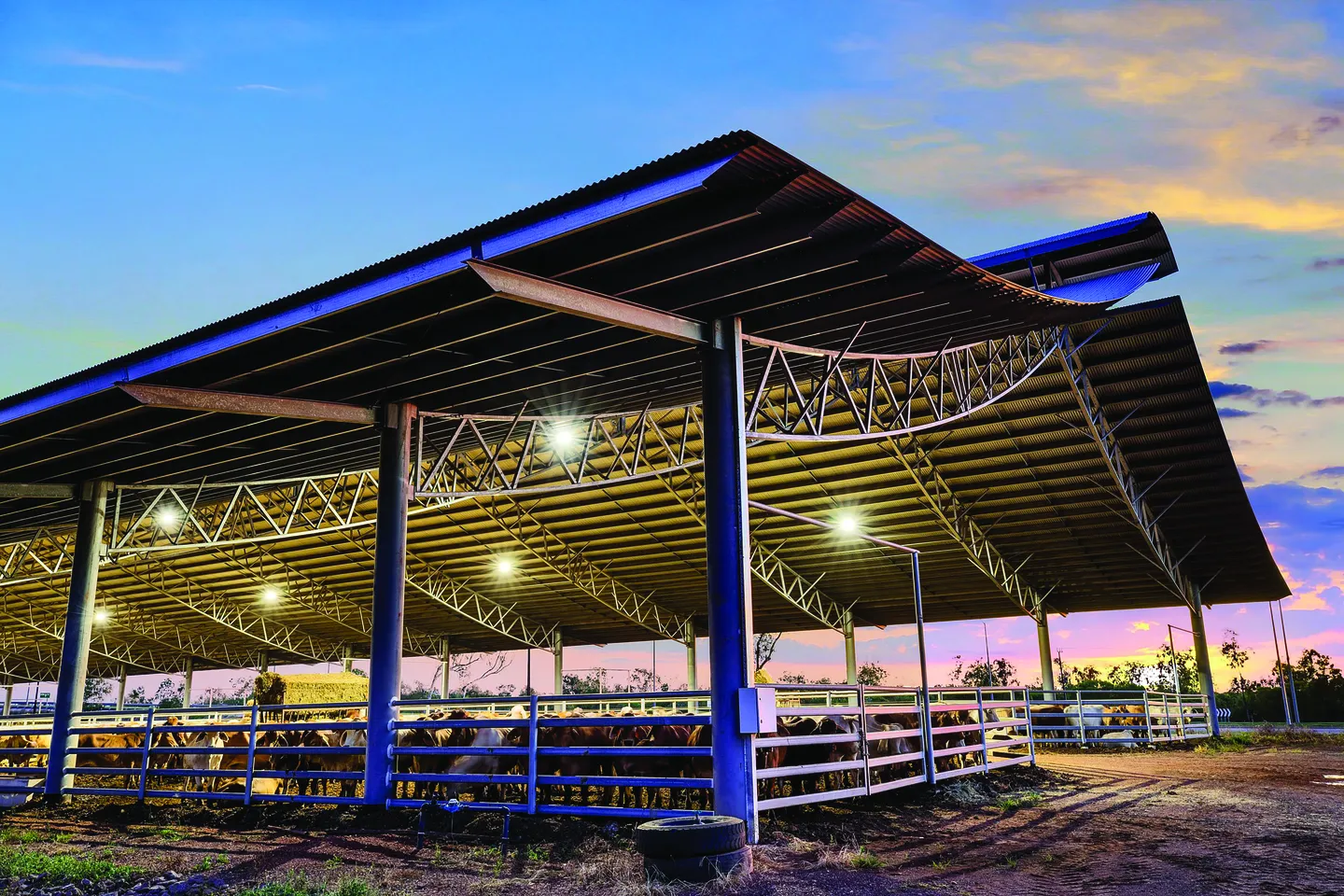
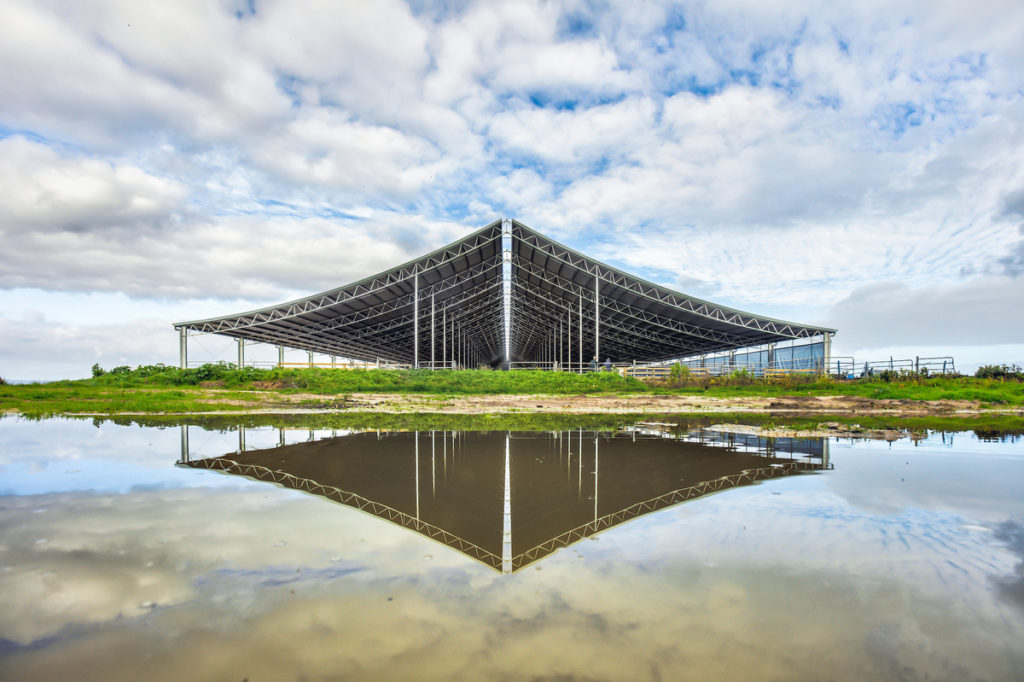
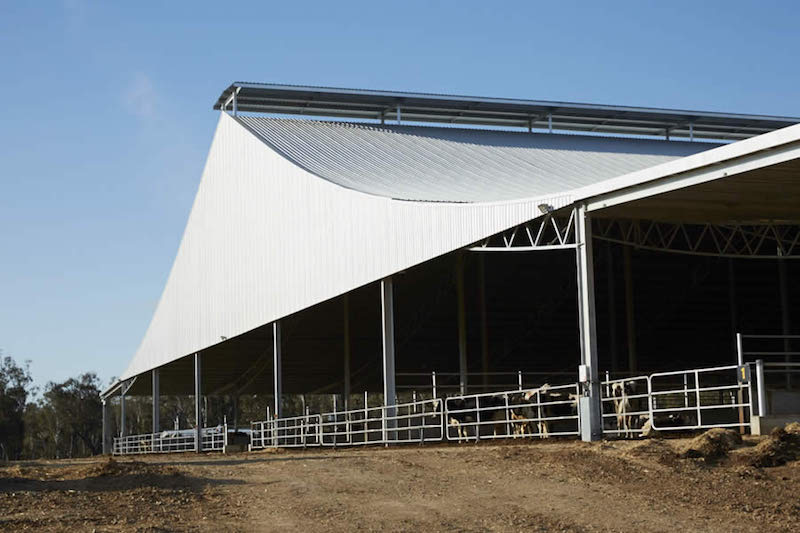
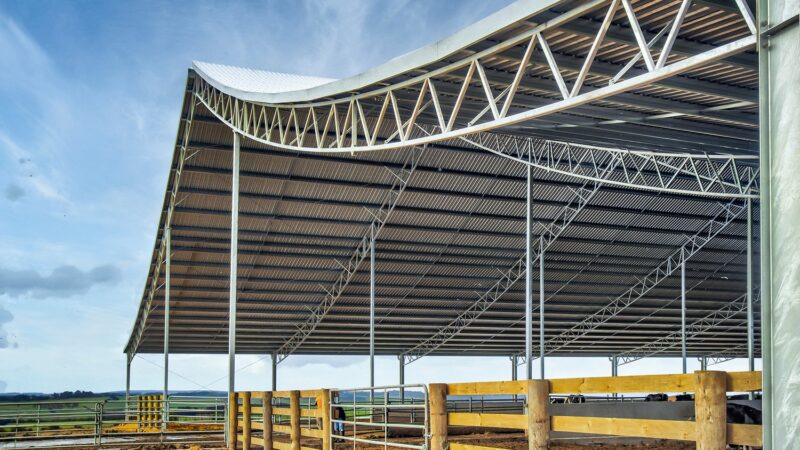
Entegra’s Ridgeback™ Dairy Sheds, exclusively supplied by NumatAGRI in New Zealand, showcase a patented climate-controlled design that ensures 20% higher air exchanges per hour compared to traditional dairy sheds. Leveraging over 37 years of industry experience, these sheds optimize milk production and ROI.

What Makes Ridgeback™ Shelters Different?

20% Higher Air Exchanges:

Curved roof to maximise natural ventilation, thereby minimising the chance of heat stress and the growth of bad bacteria.

Design Flexibility:

Flexibility in the layout of the shelter to maximise efficiency in feed and water delivery.

Hot Dipped Galvanised Trusses:

Hot-dipped galvanised trusses come as a standard option for durability and the ultimate steel finish.

Great Aesthetics:

Curved roof of the Ridgeback™ provides great aesthetics and gives a unique looking and state-of-the art barn.

How Much Does It Cost to Build a Ridgeback™ Shelter?

The cost of constructing a Ridgeback™ Shelter varies based on several factors, including size, flooring choices, and additional features. Typically, the cost ranges from $1,600 to $2,500 per cow. Factors influencing the cost include:

  • Quality of Material: The overall spec of the composting barn will affect the price. Items such as CHS columns, feed face type (concrete or wooden), ridge caps, closed or open ends will alter the price.
  • Size and Capacity: The span and length of the composting barn changes the price. Contact our team to find out more about this variable as different spans come at different price points.
  • Environmental: Variables such as wind and snow loadings, water table, soil type, and prevailing wind direction will change the requirements of the build.

The Roof That Delivers 20% Better Air Flow

Here's what you get when you choose a Ridgeback™ roof:
Patented Roof Design:

Exclusive access to patented designs for self ventilating roof structures

Tapered Gutter System:

Exclusive access to a patented tapered gutter system

Gallery

Make A Smart Investment
In Your Farm

Get a quick quote and discuss customisation options.

What is a Feed/Stand-Off Pad?

Feed / Stand-Off Pads

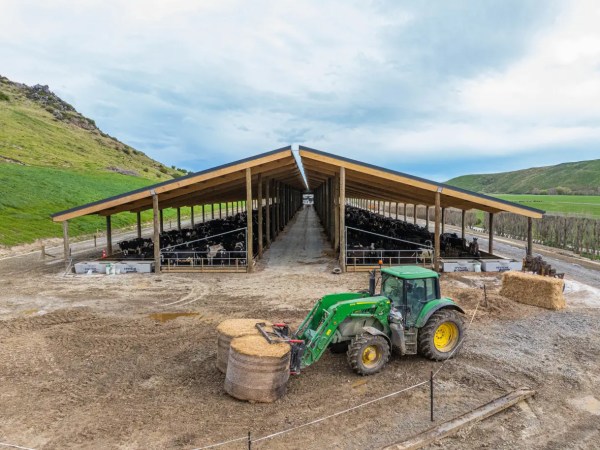
A feed/stand-off pad is a designated hard surface area, often located near the dairy shed, specifically designed for feeding supplements and/or loafing of cattle. It serves as a reliable off-paddock solution, ensuring cattle have a consistent area to feed, irrespective of weather conditions.

Pros of Building a Permanent Feed Pad

Pros:

Efficiency:

Streamlines the feeding process.

Pasture Protection:

Reduces pasture damage and maintenance costs.

Feed Management:

Minimizes feed wastage.

NZ dairy farms adopt advanced stand-off pads to enhance sustainability. Farmers integrate improved designs that reduce mud and manure buildup for better cow comfort. They use effluent systems to cut nitrate leaching by up to 55%. Covered pads now include ventilation to manage heat stress, aligning with DairyNZ guidelines.

Farmers improve pasture utilisation by standing cows off during wet conditions, increasing regrowth rates. They enhance nitrogen fixation in soils by minimising pugging. Pads reduce overland flow and phosphorus runoff for healthier waterways.

Farmers achieve better animal welfare, cutting injury risks in confined herds.

Let’s Price It Right

Get real numbers, not guesses.

We’ll show you the smartest way to build your Feed Pad: cost-efficient, practical, and built around your farm.

Options: Roof or no roof?

Choosing between a roofed or open feed pad depends on your farm’s specific needs. While an open feed pad is more cost effective, a roofed variant offers shelter from the elements, ensuring cow comfort year-round. Additionally, a roof eliminates rainfall-related effluent issues.

For some farms, expanding the size of the effluent pond can be a viable and economical alternative to roofing the feed pad. This approach can effectively manage the additional runoff without incurring the significant costs associated with constructing a roof.

Options: Surfaces

Different surfacing options cater to varying needs
Soft Bedding:

Materials like straw and woodchips are comfortable but require regular maintenance and replacement.

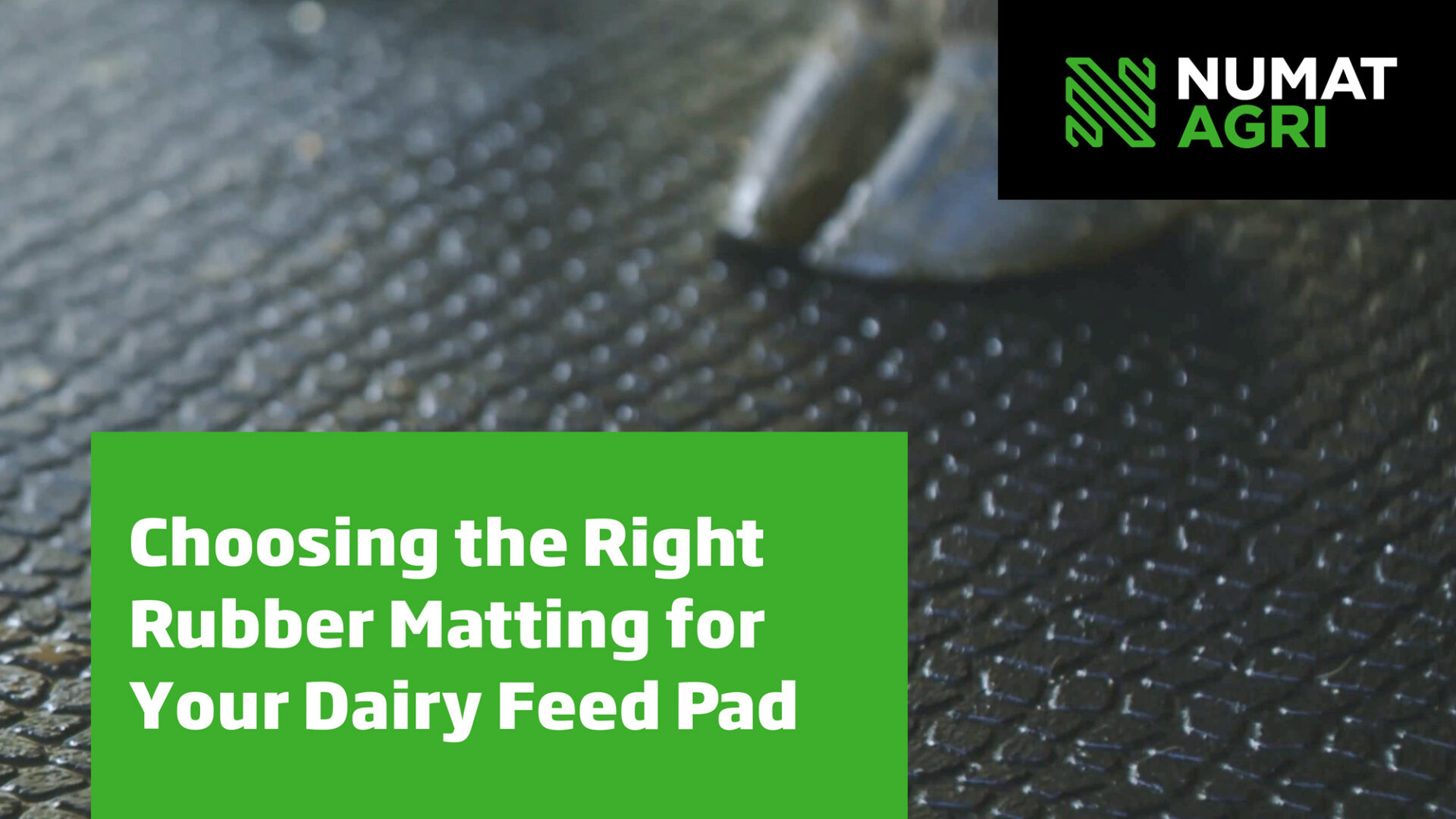
Rubber Matting:

Durable, easy to clean, and provides a comfortable surface for the cattle. Ideal for use with scrapers or flood wash systems.

Success Stories

Gallery

Get Our 'No Fluff' Off Paddock Systems Guide

Quickly understand and compare all major off-paddock systems with our comprehensive, one-page guide. It covers:

  • Cost per cow
  • Cleaning system compatibility
  • Surface options
  • Area requirements per cow
  • Pros and cons of each system
  • Equipment needed
  • Loafing time
  • Daily and weekly labour needs
Off paddock systems comparison

Cut through the noise and get the clear insights you need to make an informed choice.

NumatAGRI: Tailored Systems for Your Farm

We don’t just bring a catalogue; we bring a commitment to understanding your unique needs.

With our design and construction expertise, we’ll help you visualize your project with 3D designs and provide transparent costings.

If you’d like to discuss options with one of our consultants, fill out this form.

Or call us on: 0800 686 119

A Guide to Off-Paddock Systems for New Zealand Dairy Farms

In the evolving landscape of dairy farming, off-paddock systems are emerging as pivotal tools for many farms. In this article, we take a look at the main types of systems available in New Zealand: compost barns, open feed pads, free stall barns, and loose-housed barns; the pros and cons of each, and which is right for your farm.

Continue reading

Feed Pad & Barn Construction

Which system is right for your farm?

In the evolving landscape of dairy farming, off-paddock systems are emerging as pivotal tools for many farms, offering benefits from pasture protection to enhanced cow welfare and productivity.

As you contemplate integrating these systems into your farm, understanding each’s nuances can guide your decision-making.

Exclusive supplier of Ridgeback barns

Gallery

Success Stories

Get Our 'No Fluff' Off Paddock Systems Guide

Quickly understand and compare all major off-paddock systems with our comprehensive, one-page guide. It covers:

  • Cost per cow
  • Cleaning system compatibility
  • Surface options
  • Area requirements per cow
  • Pros and cons of each system
  • Equipment needed
  • Loafing time
  • Daily and weekly labour needs
Off paddock systems comparison

Cut through the noise and get the clear insights you need to make an informed choice.

NumatAGRI: Tailored Systems for Your Farm

We don’t just bring a catalogue; we bring a commitment to understanding your unique needs.

With our design and construction expertise, we’ll help you visualize your project with 3D designs and provide transparent costings.

If you’d like to discuss options with one of our consultants, fill out this form.

Or call us on: 0800 686 119